
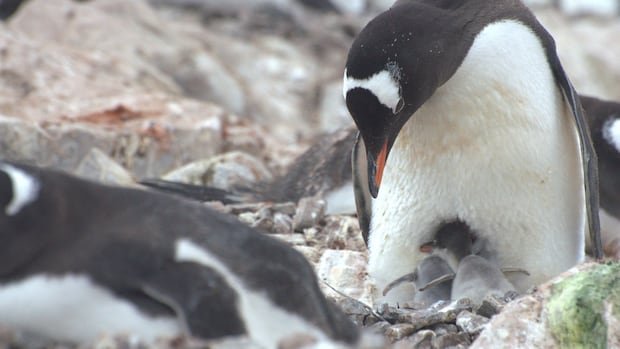
Penguins in Antarctica are rapidly adjusting their breeding patterns to cope with increasing temperatures caused by climate change, according to a study spanning a decade. The research, recently published in the Journal of Animal Ecology, examined three penguin species and revealed that each species is adapting at different rates based on their unique characteristics and susceptibilities.
Lead by biologist Ignacio Martinez from the University of Oxford, the study indicated that some penguin species may be more successful in adapting to the changing environment, leading to potential “winners and losers of climate change.” Among the species studied – Gentoo, Adélie, and chinstrap penguins – the Gentoo penguins, known for their ability to consume fish besides krill and inhabit their nesting areas year-round, demonstrated the most significant change in their breeding season, shifting by an average of 13 days earlier.
In contrast, the Adélie and chinstrap penguins, which heavily rely on krill for their diet and undertake long migrations throughout the year, experienced a ten-day shift in their breeding seasons on average. The study utilized a network of 77 time-lapse cameras to monitor these penguin species across Antarctica, observing 37 colonies distributed across the Antarctic Peninsula and nearby islands.
Although the penguins’ rapid adaptation to climate change over the past decade is commendable, the varying rates of adaptation among different species may lead to conflicts over territory and resources. Martinez expressed concern that while Gentoo penguins appear to be thriving by establishing new colonies and increasing their population while others decline, the overall outlook for penguins is not optimistic.
Furthermore, the study highlighted that penguins are not the only species altering their breeding and migration behaviors due to climate change. A recent study in Nature Communications revealed that various bird, mammal, and reptile species worldwide are shifting the timing of their activities earlier, particularly those living closer to the poles.
The researchers emphasized the importance of understanding how these changes in breeding seasons impact penguin populations of different species, a topic that Martinez and his team plan to investigate further in the future.