
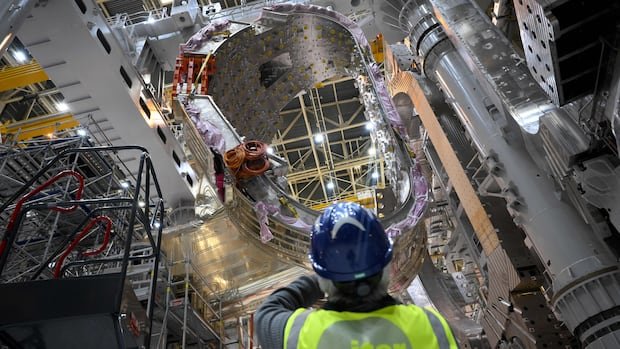
Nuclear fusion achievements by General Fusion in Canada and China’s EAST reactor have stirred excitement about the potential of clean, limitless energy to meet the growing demand from AI and electrification. The emergence of new fusion startups globally has attracted substantial private investments.
Nuclear fusion, a longstanding research area, aims to generate clean and abundant energy by combining nuclei of atoms to form a heavier element, releasing significant energy. Unlike traditional nuclear reactors that produce radioactive waste through atom splitting, fusion reactions utilize hydrogen from water, offering a cleaner alternative. However, commercial fusion reactors are not yet operational.
China’s EAST fusion reactor recently achieved a significant milestone by stabilizing plasma at densities beyond previous limits, potentially paving the way for smaller and more cost-effective fusion reactors in the future. Similarly, General Fusion’s announcement of a “world record” in neutron production has garnered attention, indicating progress in fusion technology.
Canada’s fusion landscape is evolving with the establishment of the Centre for Fusion Energy in Ontario, supported by significant investments from governmental and private entities. The global interest in fusion is driven by concerns about climate change, energy security, and the need for carbon-free, reliable energy sources to meet modern demands.
While advancements in fusion technology are promising, challenges such as high energy input requirements and reactor durability remain key hurdles. The quest for self-sustaining fuel systems and cost-effective fusion reactors continues to drive research efforts worldwide.
As the fusion industry matures, stakeholders are working towards making fusion power economically viable and competitive with existing renewable energy sources. Innovations in technology, such as high-temperature superconducting magnets, are being explored to develop smaller, more affordable fusion reactors. Collaboration between private industry and governments is crucial to address practical challenges and accelerate the transition towards fusion energy.
With the potential for fusion reactors to become a reality in the near future, industry players emphasize the importance of building supply chains, establishing supportive public policies, and raising awareness to garner community acceptance for this groundbreaking energy solution.